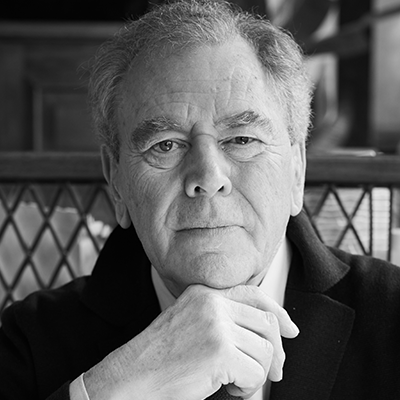
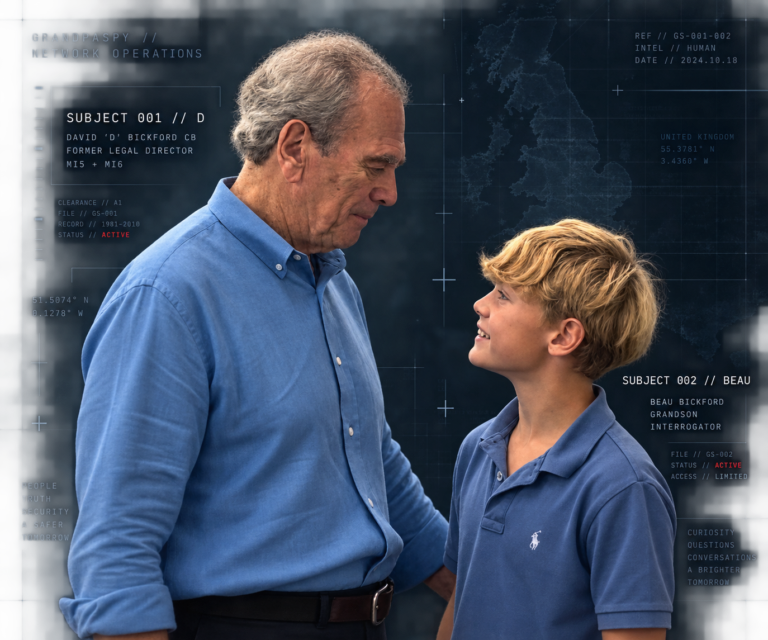
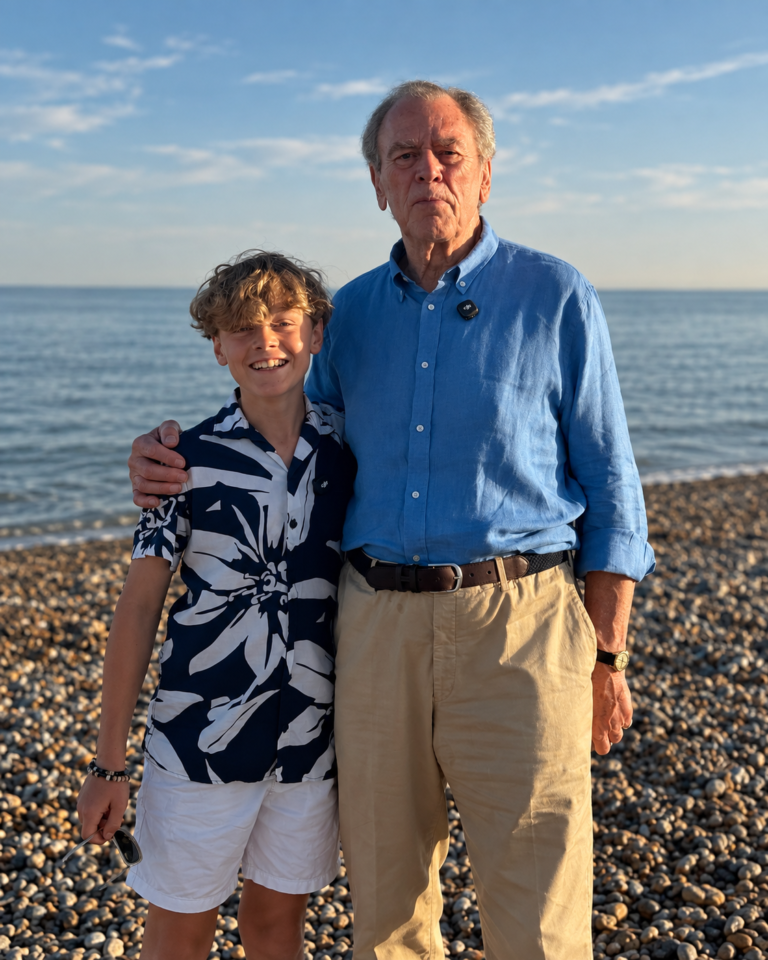


David Bickford CB spent his career inside the systems most thrillers can only imagine.
As former Under Secretary of State and Legal Director to the British Intelligence Agencies, MI5 & MI6, he worked at the sharp end of terrorism, espionage, organised crime and state secrecy.
Now he writes thrillers rooted in how intelligence really works.
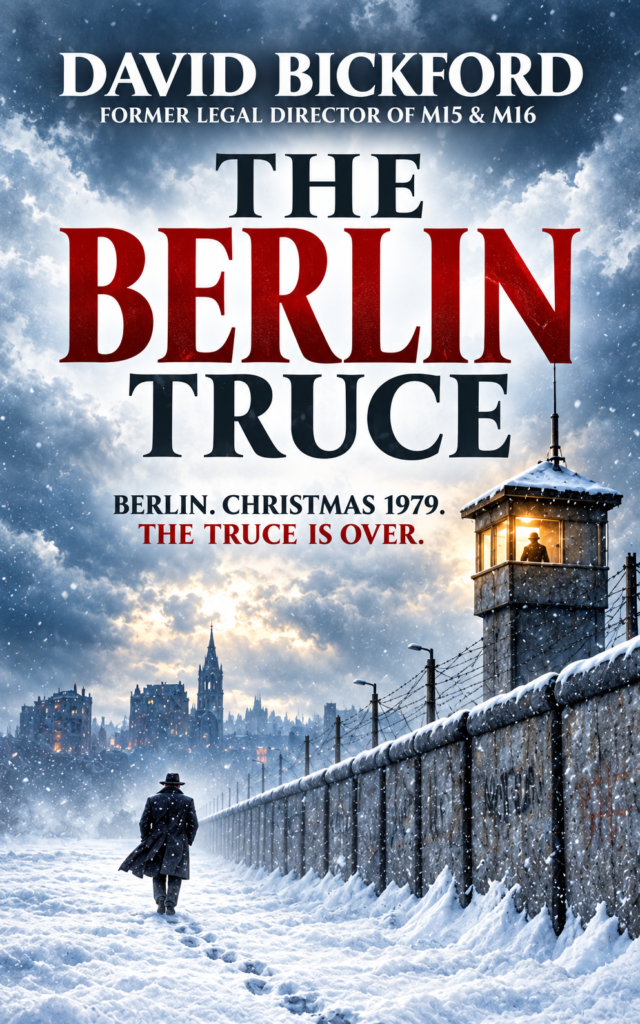
Berlin. Christmas 1979. One mistake is all it takes.
In West Berlin, the shop windows glitter and the champagne flows.
In East Berlin, the streets are dark, the walls listen, and people disappear.
Mike Peterson knows the rules. He helped write some of them.
No unsanctioned crossings.
No fraternisation.
No East Berlin girl.
Then he meets Helena.
A city divided. A man exposed. A system closing in.
What begins as a secret becomes a pattern.
What feels contained begins to spread.
And on a snowbound night, when Berlin should be holding its breath in a fragile truce, a Russian personnel carrier appears where it should not exist.
Suddenly Peterson is running.
Not from the East Germans.
Not from the Stasi.
From something older. Colder. And far more dangerous.
Because in Berlin, the real war is never on the surface
It is fought in corridors, in checkpoints, in quiet conversations that never officially happened.
It is fought with files, favours and photographs.
And with a single word that can end everything:
Compromised.
Lev Leviaski, the Soviet political adviser, is watching.
He knows Peterson.
He knows the game.
And he knows exactly what Peterson has been doing in the East.
The question is not whether Peterson will be stopped
It is who will stop him first.
And what they will do with him when they do.
Behind the diplomatic handshakes and the Christmas lights, something is moving through Berlin.
Something that was meant to stay hidden.
Something that cannot be allowed to reach the West.
And Helena is closer to it than anyone realises.
A razor wire thriller about love under surveillance and power without mercy
Perfect for readers of Mick Herron and John le Carré, Cold Protocol is a tightly constructed espionage novel where survival is uncertain and every decision carries a cost.
Most espionage fiction is written from the outside.
David Bickford writes from proximity.
His career placed him inside the legal and political framework that governs intelligence agencies, counter-terrorism operations and national security decisions.
He understands not just what happens in the field, but what happens behind closed doors when those operations are authorised, constrained or denied.
That is where the real tension lives.
Not in action.
In consequence.
David Bickford CB served as:
Former Under Secretary of State
Former Legal Director to the British Intelligence Agencies, MI5 and MI6
Companion of the Order of the Bath
Senior figure involved in terrorism, espionage and organised crime
His novels draw on a lifetime of proximity to the real world of intelligence, where the truth is rarely clean and nothing stays contained.
David Bickford is a former senior intelligence official and novelist whose fiction draws directly on a career spent at the centre of British national security during the Cold War and beyond.
Trained as a lawyer, he served for many years as Legal Director to MI5 and MI6, advising on some of the most sensitive intelligence operations of the late twentieth century. His work placed him at the intersection of espionage, law and geopolitics at a time when Europe was divided, loyalties were uncertain, and mistakes carried profound consequences.
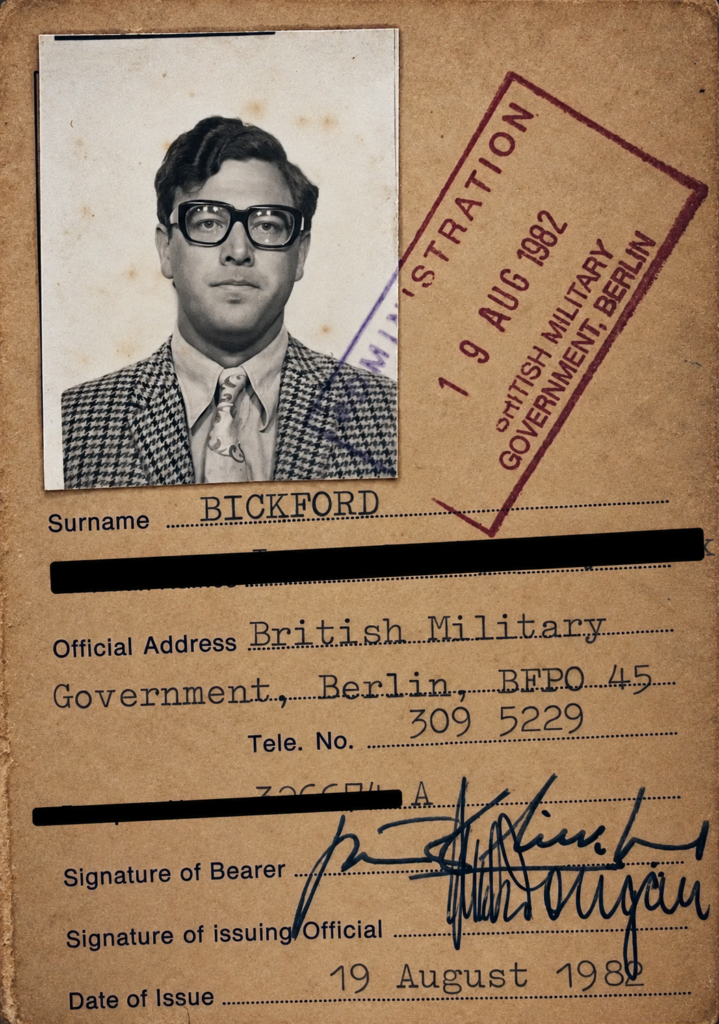
Earlier in his career, Bickford was closely involved with intelligence operations connected to Berlin, a city that would later become the moral and emotional landscape of his fiction. The atmosphere of divided streets, quiet surveillance and moral ambiguity that characterised the Cold War forms the backbone of his novels.
Bickford is the author of the acclaimed Katya series and the forthcoming Cold War thriller Cold Protocol, set in Berlin at Christmas 1979. His fiction is distinguished by its restraint, authenticity and deep understanding of intelligence tradecraft, favouring psychological tension over spectacle and moral consequence over simple resolution.
Now writing full time, Bickford explores the enduring relevance of the Cold War, the realities of intelligence work, and the human cost of secrecy. His essays and commentary examine how power operates under pressure and why many of the assumptions of that era continue to shape the world today.
He lives in the United Kingdom and continues to write about espionage, history and fiction with the perspective of someone who was there when it mattered.